
gnome elf troll
From rock-paper-scissors to a shipped product
The idea
It started with a phone call. A close friend had an idea for a board game. We met up, talked it over, and by the end of the evening we had the bones of something: not rock-paper-scissors, but Gnome-Elf-Troll. A magical garden where players took on the mantle of a gardening wizard, vying to create the most magnificent of potions. To win, each player would plan a garden row full of Magic beans, enchanted apples, cursed pumpkins. Each turn, the player use the produce to hire minions in order to secure a lead. The first one to produce enough to make the great potion would win. It was simple on paper, but it turned out to be a challenge.
We were three: Niels Vinding, Thor Anders Eiland-Dam, and me. We’d actually tried this before. We’d made a crusader game that caught the eye of Ravensburger at Essen Spiel in the early 2000s. We walked away from the business end of that one. This time we’d do it differently.
Building a game engine
We spent months on mechanics. How does it work, why does it work like that, can it work better. Prototypes, playtests, more prototypes. All three of us balancing day jobs, I myself was running Kul & Kridt and a regular simultaneously.
We entered a design contest at Viking-Con. The judges, including external judge Hans Peter Hartsteen, recognised what we’d made: a tight, elegant filler game that was easy to learn and genuinely fun. We won. The prize was Viking-Con committing to a batch order. It was enough to move forward — if we ever got it into production.
I found Ludofact in Germany as our production partner. European manufacturing, responsive, capable of exactly what we needed. We decided to attempt to crowdfund the game: sales before production, no heavy investment, keep the company small.
For the campaign video I brought in director Christian Bechmann. His feel for humour and character was exactly what a game about gnomes, elves and trolls needed.
The Campaign
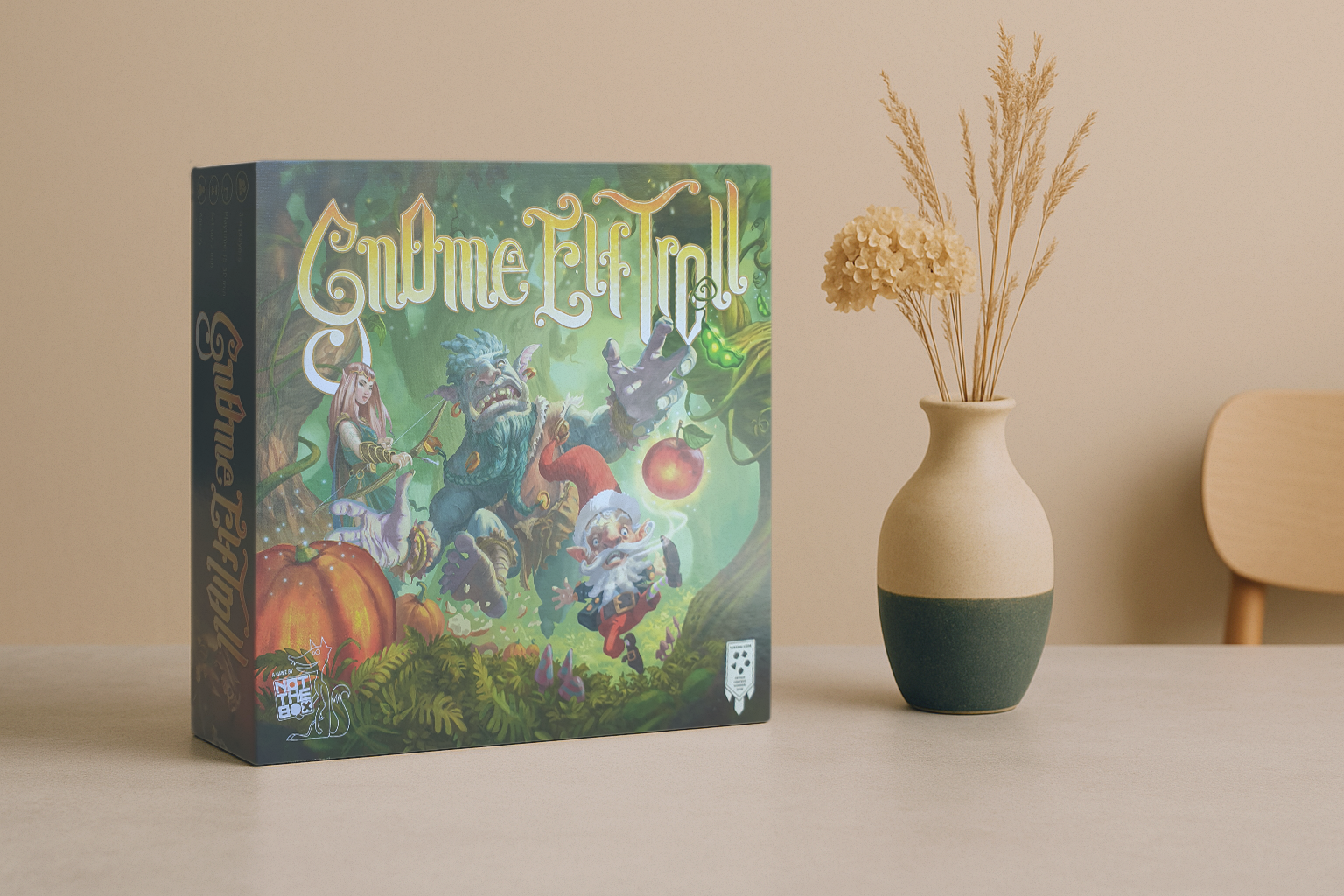
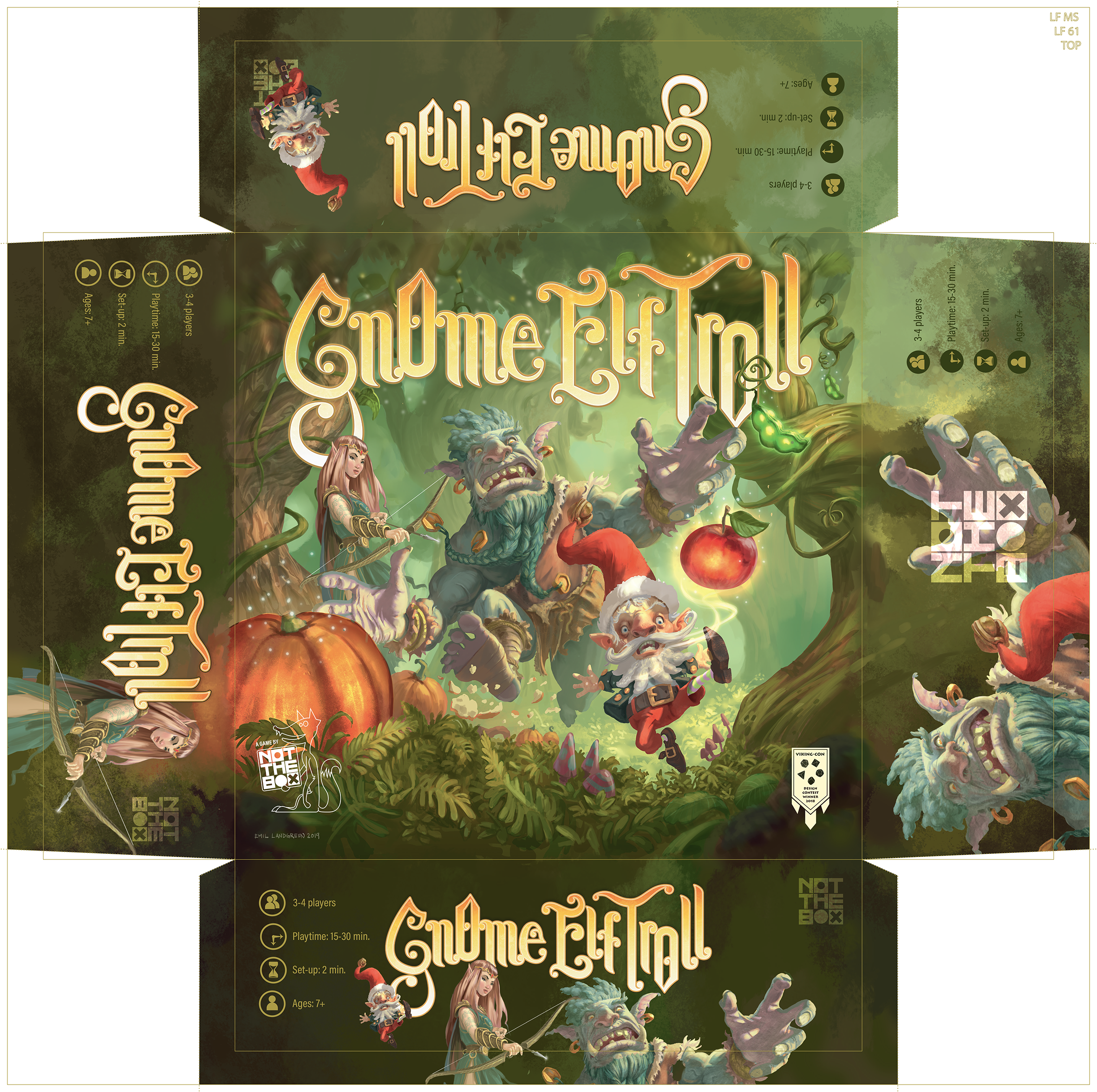
Before we launched, I hired illustrator Emil Landgreen for the cover. His casual fantasy style fit our twenty-minute family game perfectly. I sketched the concept, and he nailed his own draft on the first pass. I negotiated a layered Photoshop delivery so every element of his artwork could be repurposed across the box sides, back, and campaign materials. I asked him to part with three original character sketches: the gnome, elf, and troll. They’d serve as unique stretch goals for the Kickstarter campaign.
We built a mailing list from public playtests. We ran events at Bastard Café in Copenhagen. That’s where we met Erik Rydding from Asmodee Nordics, who liked the game and committed to a minimum order on the spot.
Then we launched. The first 48 we were constantly online, answering questions, editing the campaign in real time. It was hectic and sleepless.
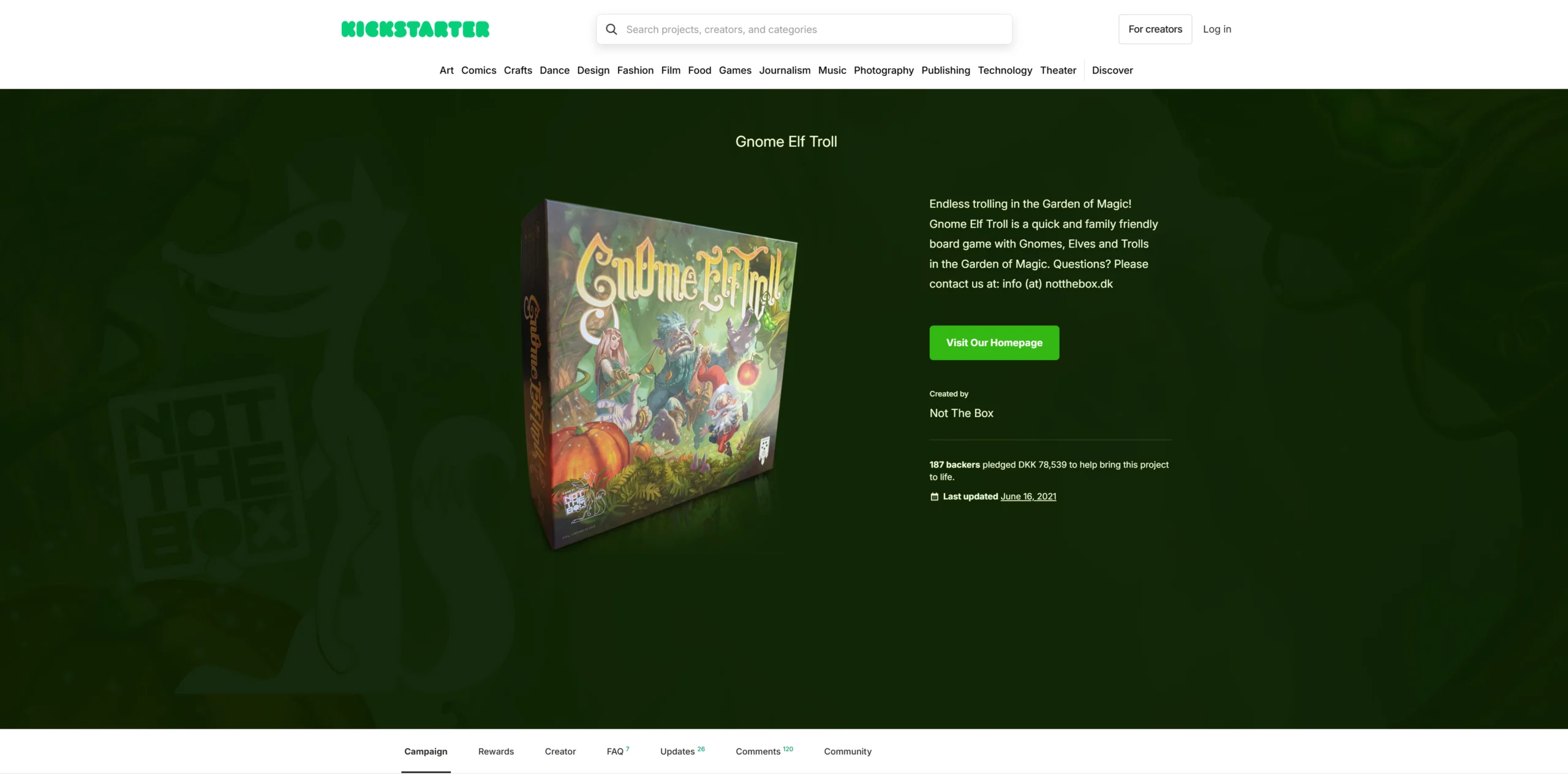
Midway through, I made a decision. The elf on the cover was an old wizened figure. He was good, but I was missing something, and I though our backers did too. I wanted representation for the female board gamers who were backing us. So, I asked Emil to redesign: redesign the elf to be a strong female archer, arrow drawn, ready to fell the troll. The audience responded and well, and soon hit our funding goal. We closed at 120% funded with 187 backers, raising 78.539 DKK against a 65.000 DKK goal. We unlocked custom designed meeples during the campaign, adding identity to the game.


Production
We hit our funding goal, now we had to make good on our promise. We got an updated production quote, but it came in steep. It was more than we had in our initial budget and more than the campaign had raised, once you accounted for packaging, shipping and storage. We weren’t taking a salary; we wanted everything left to go into the next game.
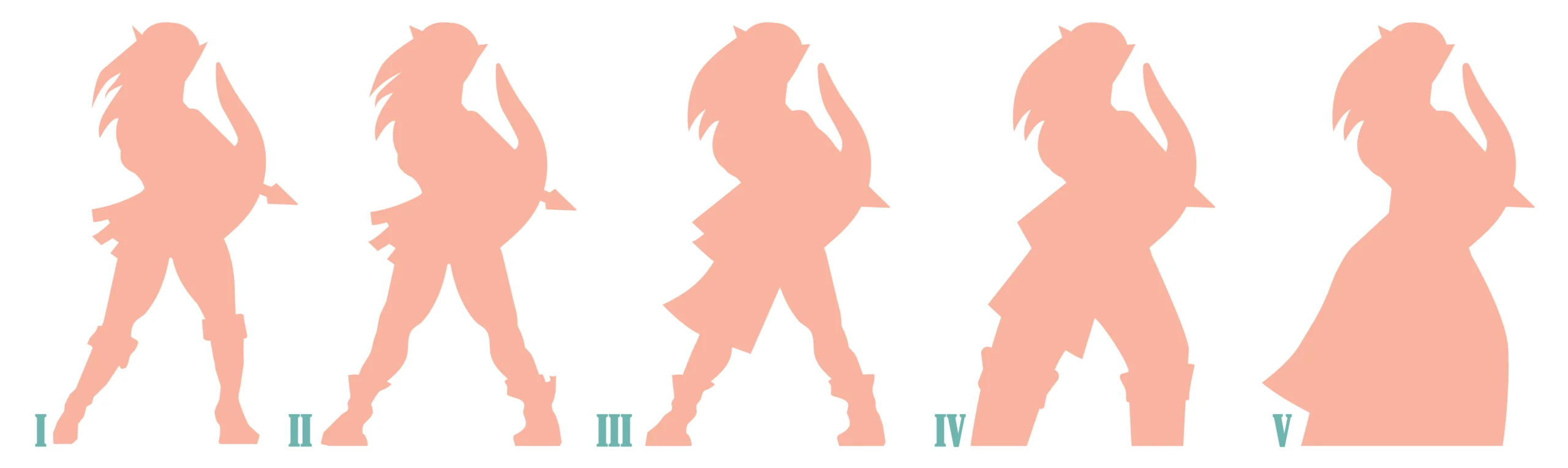
I got on the phone with Ludofact. I shaved 2mm off every meeple, going from 10mm to 8mm depth. I reduced the size of the Troll with just about 2 mm. In the end, the meeples actually became more elegant, and we averted the crisis with a geometry decision – and reached a doable budget.
Every component went through the same discipline. The rulebook became a single folded sheet — four pages, four languages, no clips, no separate booklet. One fold. It saved money we didn’t have to spend and kept the box clean. The tiles, the layout, the box design, every print-ready file delivered to Ludofact — all of it designed with production constraints as a creative parameter, not an afterthought. We were spending other people’s money. That focused the mind.
The elf meeple went through several iterations of her own. At 16mm tall and quite intricate, it kept breaking the tolerances. *With each iteration, I simplified and cute, until what remained was exactly enough. Nothing left to take away,
Eighteen months after that summer phone call, we shipped.
The result
Gnome Elf Troll landed in Faraos Cigarer, Fantask and Hyggeonkel and more. Thomas Vigild reviewed it in Politiken: four out of six. Asmodee Nordics took 120 units and Viking-Con got their games, selling them at the convention.
This case is about what happens when you own every decision from concept to shipping container. More often than not, it came down to making decisions that balanced between viable economy, and a promise to customers and backers: a great game, with unique meeples and great design.
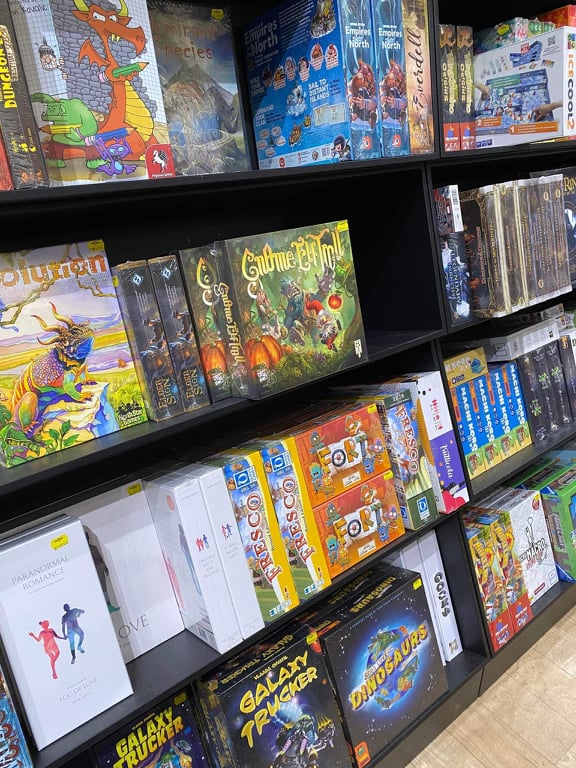
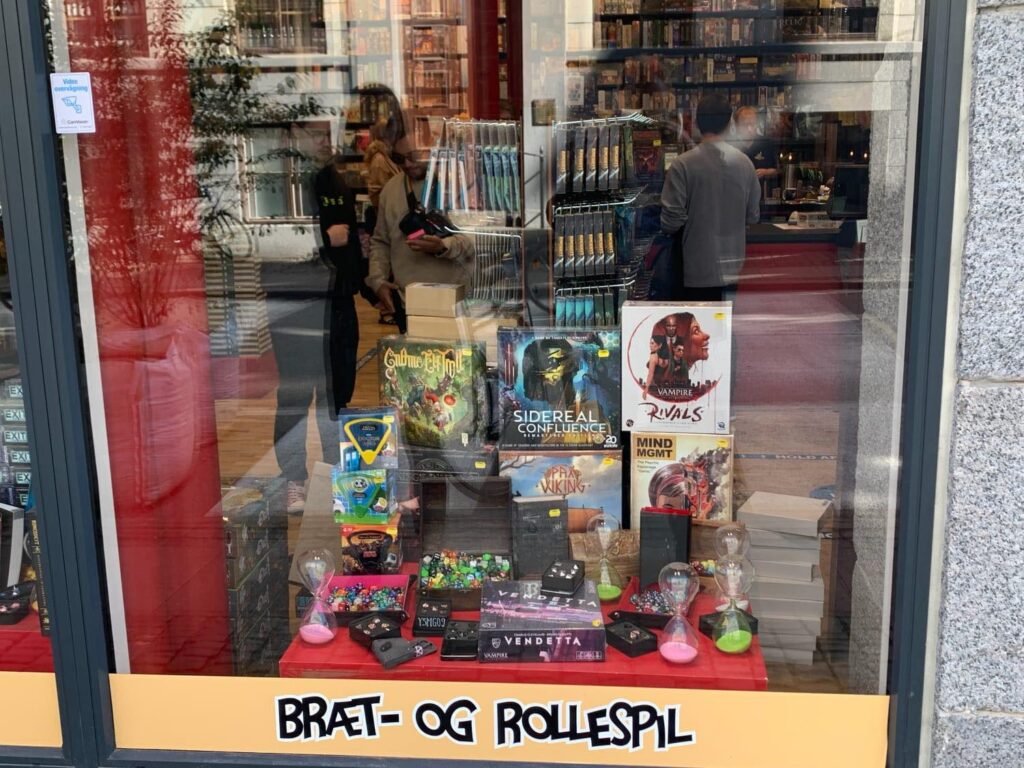
Both Fantask and Faraos Cigarer in Copenhagen featured Gnome Elf Troll prominently on their shelves and in their window exhibition. Neither of which were asked to do so – I happened upon this when I came unannounced to visit. What an honour, thank you!